
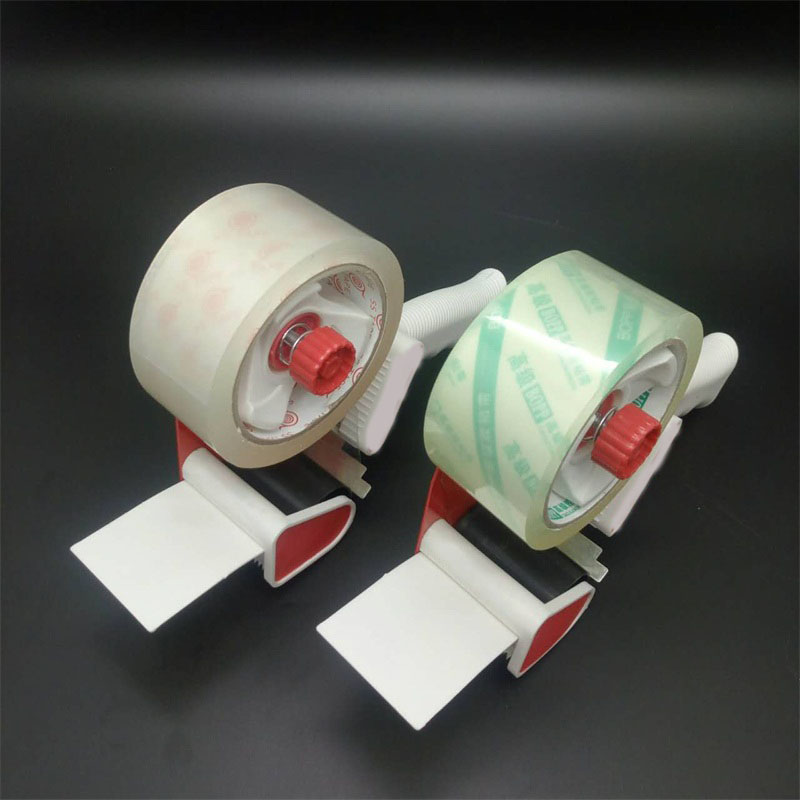
Why Most Protective Film Rolls Adopt Plastic Cores: A Complete Industry Guide
2026-09-22
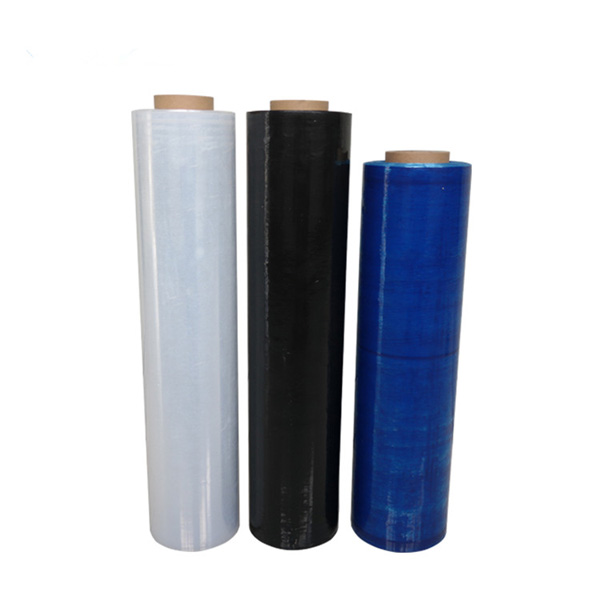
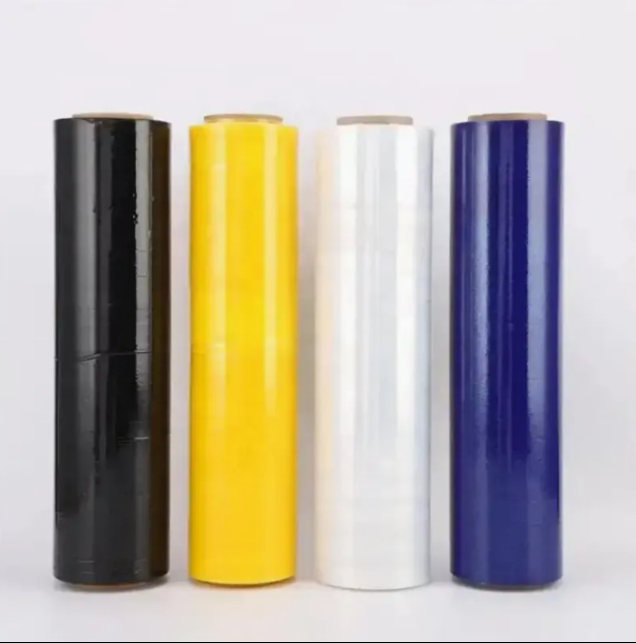
If you have ever purchased or used industrial, commercial, or household protective films, you may have noticed a universal industry norm: almost all standard protective film rolls are wound on plastic cores, instead of traditional paper cores. From surface protection films for glass, metal, and plastic panels to stretch wrapping films for logistics packaging, plastic cores have become the dominant carrier in the global protective film industry.
This is not a random material choice. Behind this industry-wide trend lies a perfect balance of structural performance, product quality stability, production efficiency, long-term cost savings, and environmental adaptability.
1. Superior Moisture and Deformation Resistance for Long-Term Storage
Protective films are widely used in cross-regional logistics, long-term warehouse storage, and humid industrial production environments. Traditional paper cores have an inherent flaw: they easily absorb moisture from the air, leading to softening, warping, bending, and even mildew deformation. Once the core deforms, the tightly wound protective film will suffer from uneven tension, edge wrinkling, local bulging, and inconsistent rolling tightness, which directly ruins the flatness and usability of the entire film roll.
In sharp contrast, mainstream plastic cores are made of high-density polyethylene (HDPE) and polypropylene (PP) materials, which featurezero water absorption and excellent moisture-proof performance. They maintain a stable cylindrical structure in dry, humid, or temperature-fluctuating environments, with no deformation, collapse, or mildew even after months of sealed storage or long-distance ocean transportation. This fundamental advantage ensures the structural integrity of protective film rolls throughout the entire supply chain.
2. Precise Dimensional Stability Ensures Film Winding Quality
The quality of protective films largely depends on winding precision. Industrial protective films require uniform winding density, consistent roll roundness, and flat film surfaces without creases or scratches. Paper cores are limited by production technology, with inevitable dimensional errors, uneven tube wall thickness, and rough inner and outer surfaces. These defects will be transferred to the film during high-speed winding, resulting in defective products.
Plastic cores are produced by precision extrusion molding, with ultra-smooth surface finish and strict dimensional consistency. The uniform tube wall thickness and standard roundness enable fully automatic high-speed winding machines to work stably. The smooth outer surface avoids friction marks, static accumulation, and film adhesion damage during winding and unwinding. For high-precision protective films used for electronic screens, optical panels, and high-gloss metal surfaces, the flawless contact of plastic cores is an indispensable quality guarantee.
3. High Structural Strength Resists Transportation and Handling Damage
Protective film rolls are usually transported in bulk, stacked in layers, and frequently loaded and unloaded. Paper cores are brittle and low in compressive strength, prone to cracking, collapsing, and flattening under extrusion, collision, or heavy stacking. A damaged paper core will cause the entire film roll to loosen, scatter, or deform, leading to massive product waste and increased enterprise loss.
Plastic cores have excellent compression resistance, impact resistance, and toughness. They can withstand heavy stacking pressure and frequent handling extrusion without structural damage. Even during long-distance road and sea transportation with severe vibration, the rigid plastic core can always support the tight winding state of the film roll. This greatly reduces the damage rate of finished products and improves the overall yield of protective film products.
4. Excellent Chemical and Static Resistance for Diverse Scenarios
Many industrial production scenarios involve chemical agents, dust, and static electricity. Paper cores are easily corroded by weak acid and weak alkali substances in the production environment, and dry paper surfaces are prone to static electricity and dust adsorption. The adsorbed dust and debris will stick to the inner layer of the protective film, contaminating the protected product surface and affecting the protective effect.
PP and HDPE plastic cores have stable chemical properties, resisting corrosion from most conventional industrial chemicals. Meanwhile, customized antistatic plastic cores can effectively eliminate static accumulation during film winding and unwinding, preventing dust adsorption and film static adhesion. This is particularly critical for dust-free workshop production and surface protection of high-precision electronic and optical products.
5. Lower Comprehensive Cost and Higher Production Adaptability
Many people mistakenly believe that plastic cores are more expensive than paper cores. In fact, when calculating the full-cycle comprehensive cost, plastic cores have obvious cost advantages. Although the unit purchase price of plastic cores is slightly higher, they greatly reduce defective products, transportation damage, and after-sales losses caused by core deformation and damage. The reduced waste rate far offsets the initial material cost difference.
In addition, plastic cores are lightweight and standardized in size, which improves container loading efficiency for bulk transportation and reduces logistics costs. They are perfectly compatible with fully automatic winding, slitting, and rewinding equipment in modern film factories, improving production line efficiency and reducing manual adjustment costs. Moreover, plastic cores support repeated recycling and secondary processing, further improving resource utilization and reducing long-term production costs for enterprises.
6. Clean and Hygienic Performance Meets High-End Industry Standards
High-end fields such as food packaging, medical equipment, and precision electronics require strict dust-free and hygienic standards for protective film accessories. Paper cores are easy to produce paper scraps, lint, and powder debris during production and use, which will pollute the clean film surface. In contrast, the integrated extrusion molding process of plastic cores produces no debris or dust, with a smooth and non-shedding surface.
This clean performance makes plastic cores fully compliant with the production standards of dust-free workshops and high-end manufacturing industries, expanding the application scope of protective films and meeting the quality requirements of high-value product protection scenarios.