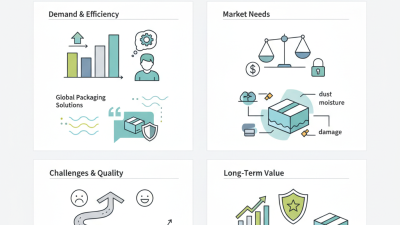
Buying plastic packing wrap for international distribution? It’s not just about comparing roll prices. If you’re a global buyer, you’ve got to match film performance to the shape of your products, warehouse conditions, shipping distance, and what local packaging markets expect. Get that buying process clear, and you’ll cut down on damage, waste, and those annoying disputes that could’ve been avoided.
This guide walks through seven practical tips for evaluating Packing Plastic Wrap. We’ll look at film thickness, stretchability, puncture resistance, cling, roll dimensions, packaging, and how reliable the supplier is. A 17-micron film might be fine for light cartons, but heavier loads usually need something tougher. Humidity and temperature matter too. A wrap that works great in a dry warehouse can act completely different during a long ocean shipment.
Small details matter. Really.
Experienced buyers? They should ask for samples before approving big orders. And test them around real cartons—not empty boxes. See if the film stretches evenly, clings without tearing, and stays put when the pallet moves. Then review technical data, batch consistency, production capacity, and delivery records. Ask suppliers how they control thickness variation and keep rolls safe from dust or moisture.
Price still matters, of course. But it shouldn’t be the only thing leading every decision. A cheaper roll can end up costing more through extra layers, damaged goods, or slower packing. I’ve seen buyers overlook core size and machine compatibility. It’s an easy mistake to make—and a costly one to fix.
No supplier is perfect. Even a solid spec needs regular review. So combine hands-on testing, documented quality checks, and realistic shipment conditions. That way, buyers can choose Plastic Packing Wrap with more confidence and fewer surprises.

Plastic Packing Wrap Buying Tips for Global Buyers
Define the Packaging Application and Required Wrap Performance
Plastic wrap should match the load, handling route, and storage environment. Start with the application, not the film gauge. Is it for pallet stabilization, bundling, dust protection, or cold-chain transport? A sharp carton corner needs puncture resistance. A loose mixed pallet needs strong cling and load retention. Warehouse trials often expose problems that supplier samples hide.
Tip: Record pallet height, load weight, corner shape, transport distance, and storage temperature. Then specify required elongation, tear resistance, puncture resistance, cling, and pre-stretch. For food-related applications, request migration and material documentation for each target market. Do not assume thicker film always performs better. It may increase cost without improving stability.
The OECD Global Plastics Outlook reports that global plastic waste reached 353 million tonnes in 2019, while only 9% was recycled. Right-sizing film can reduce unnecessary material use, but thinner is not automatically safer. The FAO Food Loss Index Report 2024 estimates that 13.2% of food was lost between harvest and retail in 2021. Stable wrapping can reduce handling damage, although it cannot solve every loss point.
Tip: Ask suppliers for independent test results and production samples. ASTM D4649 provides guidance for selecting and using stretch-wrap films. Test wrapped pallets after vibration, compression, and temperature changes. One overlooked detail is often the dispenser setting. Record it during trials. Recheck the specification after real shipments, because the first version may be incomplete.
When purchasing Plastic Packing Wrap for international shipments, start with the load, not the catalog. Polyethylene films suit many cartons because they stretch, seal, and resist ordinary moisture. Low-density polyethylene offers flexibility around uneven products. Linear low-density polyethylene usually provides stronger stretch and puncture resistance at a similar thickness. For sharp edges, consider a reinforced structure or corner protection. Material choice should follow actual handling conditions. A warehouse test often reveals more than a supplier data sheet.
Thickness is measured in microns, and a small increase can change performance and cost. Light cartons may work with 12–17 microns when surfaces are smooth and loads are stable. Heavier or irregular loads may need 20–30 microns, especially during long ocean transit. Do not choose thickness by weight alone. A thick film can still tear if it stretches poorly. Check elongation, tensile strength, cling, and puncture resistance. Ask for measured values, test methods, and sample rolls before approving a large order. Numbers need context.
Try wrapping one pallet in a cool room and another in warm, humid conditions. Watch for loose tails, film splitting, and carton movement after vibration. I once treated thickness as the main safety factor; the real weakness was poor load alignment. That mistake deserved a second test. Film with recycled content may perform differently between production batches, so document samples, storage time, and application settings. Keep rolls dry, away from direct sunlight, and within the recommended temperature range. A practical specification includes material, micron range, stretch target, core size, and acceptable defect limits.
Stretch wrap, cling wrap, and shrink wrap solve different packaging problems.
Stretch film holds pallet loads through elastic tension, while shrink film needs controlled heat to tighten around products. Cling film suits food contact and short-term covering, but it offers limited load stability. Specialty films may add UV resistance, anti-static performance, or puncture protection. Choose the function before the price.
Grand View Research estimates the global stretch film market reached about USD 3.6 billion in 2023, with continued growth through 2030. Smithers also identifies flexible packaging as a major growth area, driven by lightweight materials and logistics efficiency.
These figures do not make every thin film a smart purchase. Test a wrapped pallet after vibration, corner impact, and temperature changes. A film that feels strong by hand may fail around sharp cartons. I learned that the hard way.
Ask suppliers for gauge, tensile strength, elongation, puncture resistance, and pre-stretch data. Compare real coverage per kilogram, not roll weight alone. For shrink film, confirm shrink temperature and shrink percentage against your equipment.
For cling film, verify food-contact documentation for the destination market. Specialty options need a clear reason; extra additives can increase cost without improving protection.
Avoid vague claims such as “high performance.” Request test methods and batch consistency records. Small details matter.
7 Plastic Packing Wrap Buying Tips for Global Buyers
Choosing Packing Stretch Wrap requires more than comparing roll prices. Check the wrapped load after vibration, corner pressure, and temperature changes. A stable pallet should stay square, with cartons aligned and no visible leaning. Measure film thickness, stretch percentage, and holding force. These figures reveal more than appearance.
Tips: Match the wrap to the load, not only the machine. Heavy cartons may need stronger film or extra layers. Test the seal around sharp corners, uneven surfaces, and dusty cartons. A weak seal can open during handling. Keep sample records, including load weight, pallet size, wrapping speed, and storage temperature.
Protection also depends on the environment. Outdoor shipments may face moisture, heat, or cold during transfer. Ask for clear performance data and confirm whether the film resists tearing and punctures. Do not assume thicker film always performs better. Sometimes, poor tension causes waste and unstable loads. A small trial can expose this mistake.
Check the bottom layers carefully. They carry the greatest pressure. Inspect the film after one day and again after transport simulation. Look for necking, loose tails, crushed cartons, or shifting corners. Some results may disappoint. That is useful evidence. Reliable buying decisions come from repeatable tests, clear specifications, and honest review of failures.
When sourcing Packing Cling Film, supplier quality matters more than a low quotation. During factory audits, I check roll tension, seal strength, odor, and thickness variation. A glossy sample can still hide weak performance. Request recent batch records, calibrated testing reports, and traceability from resin to finished roll. Verify whether the supplier operates under ISO 9001 or an equivalent quality system.
Tip: Ask for food-contact declarations, migration test results, and certificates covering the exact film grade. Generic documents are not enough. Requirements may differ under EU food-contact rules, U.S. regulations, or local import standards. OECD’s Global Plastics Outlook reported 353 million tonnes of plastic waste globally in 2019. Packaging generated about 40% of that waste. This makes material selection and end-of-life claims important.
Tip: Confirm resin composition, additives, recycled content, and recyclability evidence. Tip: Audit production hygiene, pest control, and worker training. Packaging-material standards can support this review, but certification alone does not guarantee every shipment. Check certificate scope, expiry dates, and issuing-body details. Also test samples independently for cling, puncture resistance, and food-contact safety. Small failures matter.
Tip: Include acceptance limits in the purchase contract. Tip: Require corrective-action records for defects. Tip: Review shipment consistency, not only the first sample. Tip: Keep a retained sample from each lot. No checklist is perfect. I still revisit supplier risks when regulations, formulas, or transport conditions change.
Plastic Wrap pricing rarely reflects the real purchase cost. Calculate the landed cost per carton: product price, tooling, inspection, inland transport, ocean freight, insurance, duties, and destination handling. The OECD Global Plastics Outlook reports that packaging represented about 40% of global plastic use in 2019. That scale makes small material differences important. A film costing $0.03 more per roll can add thousands of dollars to a large order. Ask suppliers for film thickness, roll length, core weight, carton dimensions, and net weight. Then compare usable meters, not only unit prices.
Shipping also changes the best order quantity. The International Maritime Organization reported that international shipping produced about 2.89% of global greenhouse-gas emissions in 2018. A half-empty container wastes both money and transport capacity. Calculate cartons per pallet, pallets per container, and the cost per delivered roll. Do not automatically chase a full container. Storage rent, cash tied in inventory, and slow-moving Plastic Wrap may outweigh freight savings. Use forecast demand, safety stock, and supplier lead time to set reorder points. Small orders hurt.
A practical formula is:
This method is not perfect; seasonal demand can still surprise you. Recheck quotes when fuel surcharges, exchange rates, or port fees change. The World Bank’s Logistics Performance Index 2023 also shows major differences in customs and delivery reliability across markets, so a cheaper origin may create costly delays.
7 Plastic Packing Wrap Buying Tips for Global Buyers
Confirm Testing, Samples, Customization, and Delivery Terms
A reliable purchase begins with test evidence, not attractive product photos. Ask for thickness, tensile strength, puncture resistance, cling, and sealing results. Testing should match the wrap’s intended use and destination requirements. An independent laboratory can add useful confidence. Still, no test is perfect. Request the test method, date, sample number, and acceptable tolerance. I have seen polished reports hide unclear testing conditions.
Samples reveal practical problems early. Request several rolls from the actual production material, not only a showroom sample. Check film clarity, winding quality, core diameter, carton protection, and machine performance. Test the wrap in cold storage and normal warehouse conditions when relevant. Record the roll weight and usable length. A small spreadsheet helps. One sample may mislead, especially when production varies between batches.
Customization should be written in measurable terms. Confirm width, thickness, color, printing, packaging, core size, and label language. Include approved drawings and a signed sample reference. Delivery terms need equal attention. Clarify minimum order quantity, lead time, inspection timing, loading port, shipping responsibility, and documents. Define what happens after late delivery or damaged cartons. I once underestimated pallet space, and the freight cost changed sharply. That mistake was avoidable. Leave room for production delays, but do not accept vague promises.
| No. | Buying Dimension | What Global Buyers Should Confirm | Recommended Specification or Evidence | Why It Matters | Suggested Contract or Order Note |
|---|---|---|---|---|---|
| 1 | Film Type and Application | Confirm whether the wrap is intended for hand wrapping, machine wrapping, pallet stabilization, food contact, or general industrial packaging. | State the film structure, intended load type, wrapping method, and required contact status. For food packaging, request applicable food-contact compliance documentation for the destination market. | A film suitable for manual bundling may not provide the puncture resistance, stretch performance, or holding force required for automated pallet wrapping. | “Supplier shall manufacture the film only for the approved application and shall not change the film structure without prior written approval.” |
| 2 | Thickness and Dimensional Tolerance | Check nominal thickness, roll width, roll length, core diameter, core length, and permitted tolerances. | Request a product specification sheet showing thickness in micrometres, width and length in metric units, net film weight, and tolerance limits. Verify measurements on samples. | Thickness variation affects yield, load containment, puncture resistance, roll weight, and compatibility with wrapping equipment. | “Measured dimensions and tolerances shall comply with the approved specification sheet; nonconforming rolls may be rejected or replaced.” |
| 3 | Mechanical Performance Testing | Confirm that test methods and acceptance criteria cover tensile strength, elongation, tear resistance, puncture resistance, and holding force where relevant. | Request recent batch test reports identifying the test method, specimen direction, conditioning environment, test date, and measured results. Use recognized standards or an agreed laboratory method. | A film can appear clear and uniform while still failing during stretching, corner contact, transport vibration, or stacking. | “Each production lot shall be tested against the approved performance criteria, with reports available for buyer review before shipment.” |
| 4 | Sample Approval and Trial Use | Obtain production-equivalent samples and evaluate them on the actual products, wrapping equipment, and transport route when possible. | Record sample roll dimensions, test date, wrapping settings, number of layers, load type, observed defects, and approval status. Keep a retained reference sample. | Laboratory results alone may not reveal film breakage, poor cling, telescoping rolls, blocking, or unstable loads during real operations. | “Mass production shall begin only after written sample approval. Any approved sample must be traceable by code or lot reference.” |
| 5 | Customization and Artwork Control | Confirm options for color, transparency, printed markings, roll dimensions, core specifications, packaging, labels, and pallet configuration. | Approve a written artwork proof and packaging drawing. Define color references, print position, repeat length, barcode requirements, language, and permitted visual variation. | Small changes in artwork, core size, or roll configuration can affect machine compatibility, customs documentation, and warehouse handling. | “No customized production, artwork change, or packaging change is permitted without the buyer’s documented approval.” |
| 6 | Packaging, Labeling, and Traceability | Verify protection against moisture, dust, crushing, and handling damage, together with carton, pallet, and roll identification. | Require labels showing product code, dimensions, quantity, gross and net weight, batch or lot number, production date, country of origin, and handling marks where required. | Clear identification supports incoming inspection, stock rotation, complaint investigation, and customs clearance. | “Every roll and outer package shall carry the agreed identification details and remain legible after normal transport and storage.” |
| 7 | Delivery, Incoterms, and Inspection Terms | Confirm production lead time, shipment window, minimum order quantity, Incoterms® rule and named place, freight responsibility, documents, inspection point, and claims procedure. | Specify the agreed Incoterms® 2020 rule, delivery location, quantity tolerance, packing list, commercial invoice, transport document, certificate requirements, and pre-shipment inspection arrangement. | Clear delivery terms allocate costs and risks, reduce misunderstandings, and help buyers plan inventory and customs clearance. | “Delivery dates, shipping documents, inspection rights, quantity tolerance, and notification periods for visible and concealed defects shall be stated in the purchase order.” |
Check thickness, stretch percentage, holding force, and usable roll length. Appearance alone proves little.
Wrap a pallet and inspect it after vibration and temperature changes. Cartons should remain aligned, square, and upright. Watch the corners.
Not always. Heavy loads may need stronger film or extra layers. Poor tension can waste material and reduce stability.
Test sharp corners, uneven surfaces, dusty cartons, and bottom layers. The bottom layers carry the greatest pressure.
Look for loose tails, necking, crushed cartons, torn film, and shifting corners. Some results may disappoint. That is useful evidence.
Consider moisture, heat, cold, tearing, and puncture resistance. Ask for clear performance data before ordering large quantities.
Include product price, inspection, inland transport, freight, insurance, duties, and destination handling. Compare cost per usable meter.
Use demand forecasts, safety stock, storage costs, and supplier lead times. A full container is not always cheaper.
Record load weight, pallet size, wrapping speed, storage temperature, and test results. Repeat the trial. One test can mislead.
Fuel charges, exchange rates, port fees, and delivery delays can change the final cost. Recheck assumptions. They may be wrong.
Buying Plastic Packing Wrap for global operations requires more than comparing prices. Start by defining the packaging application, product shape, handling conditions, and required performance, including strength, flexibility, cling, stretch, shrink behavior, puncture resistance, and moisture protection. Select a suitable film material and thickness, then compare stretch, cling, shrink, and specialty wrap types according to load stability, surface protection, sealing needs, and storage or transport conditions.
A reliable purchasing process should also evaluate supplier quality systems, relevant certifications, production consistency, and compliance with destination-market requirements. Calculate the total cost by considering material usage, waste, shipping volume, packaging efficiency, and appropriate order quantities rather than focusing only on unit price. Before placing a large order, request samples, confirm testing methods and results, and discuss customization options such as size, color, printing, and core specifications. Clear delivery schedules, inspection procedures, payment terms, and communication expectations can help reduce risk and support a stable international supply chain.