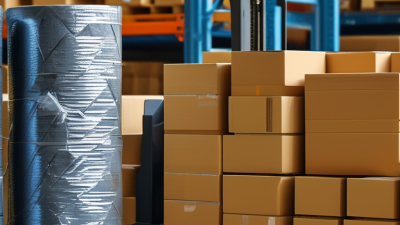
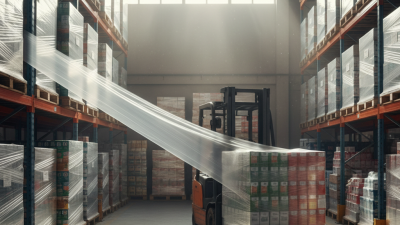
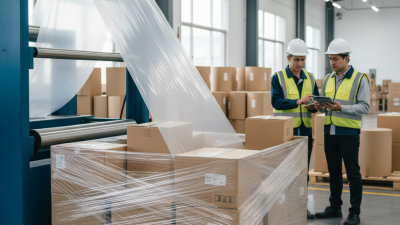
Hey, have you ever heard of Stretch Film? It's basically a super thin, elastic wrap that wraps around your boxes, pallets, or awkward loads to keep everything secure during storage and shipping. You know how in busy warehouses, a good wrap means your pallets stay put when you lift them with a forklift? Yeah, that’s the goal — making sure they don’t shift or topple over. Honestly, that’s more important than making the packaging look pretty.
Now, this stuff usually comes in two types: cast and blown. Cast film tends to unwind smoothly and stays at a nice, even thickness—great when you want things to be consistent. Blown film, on the other hand, is tougher, more resistant to punctures, and handles trickier loads better. For small jobs or just the occasional wrap, hand film is totally fine, but if you’re wrapping a lot, machine film is your buddy—it’s faster and gives you more even tension. Oh, and there’s also pre-stretched film, which can save your muscles and cut down on material waste, but it’s not always the best fit for every load. Want to get fancy? They also make colored, opaque, or UV-resistant options for more specific needs.
Picking the right film isn’t just about hunting for the lowest price either. You’ve gotta think about the weight of the load, whether the corners are sharp, storage conditions, what kind of wrapping equipment you’re using, and how much holding power you really need. It’s a smart idea to actually test out the film on your pallets rather than just looking at specs. Small details matter—a little too much tension can crush your boxes, but not enough and they might shift around. I’ve seen teams blame the film for issues, when really, it was just the wrapping setup that needed fine-tuning. That’s something to watch out for.
This guide breaks down how Stretch Film works, where each type is most effective, and what factors you should consider when choosing. It also points out common pitfalls, easy ways to test, and reminds you that there’s always a balance between protecting your loads and being responsible about material use. Honestly, no single film is perfect for every job—so keep that in mind. That’s a good starting point in my book.
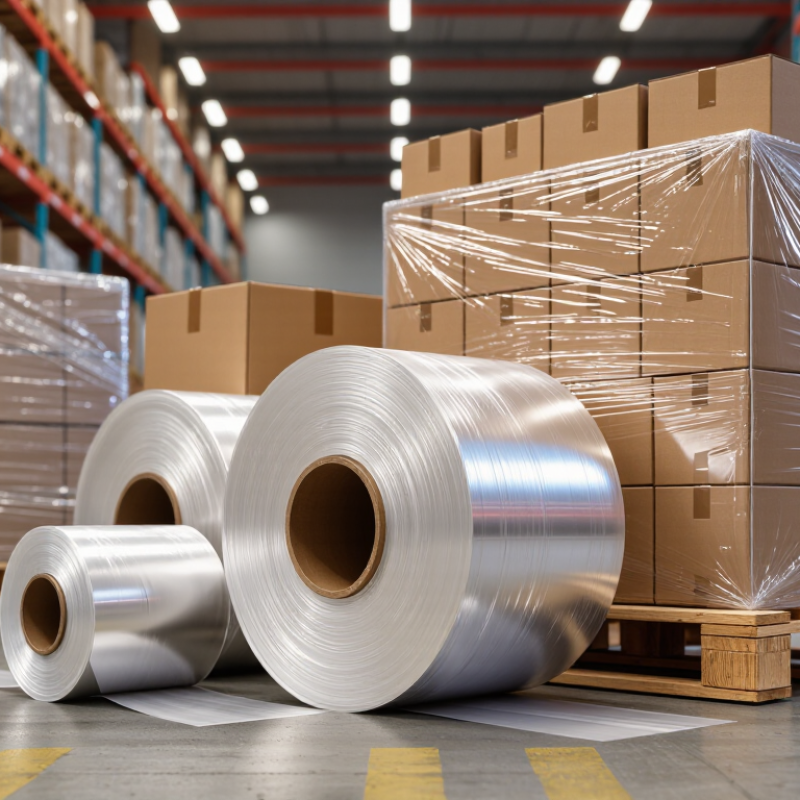
Stretch film is a thin, elastic plastic film used to secure goods during storage and transport. It wraps around cartons, pallets, or irregular loads and holds them through tension. Most commercial film is made from polyethylene, often called Pe Stretch Film. The material stretches when pulled, then tries to return to its original shape. This recovery creates a firm, continuous grip without glue. That is the core principle.
In practice, stretch film protects surfaces from dust, light moisture, and shifting. A warehouse worker may wrap a pallet several times, overlapping each layer by about half its width. The correct tension matters. Too little tension allows movement; too much can crush soft cartons or distort products. Film thickness, width, cling, and puncture resistance all affect performance. Clear film supports visual checks, while opaque film can reduce light exposure, although visibility is sometimes more useful.
Types differ by application. Hand stretch film suits low-volume work, while machine film supports consistent wrapping on busy lines. Pre-stretched film requires less force and may help reduce operator fatigue. High-performance grades resist tears around sharp corners, but no film is invulnerable. I have found that a practical trial reveals more than a specification sheet. A film that performs well on smooth boxes may fail against rough edges or cold surfaces. Storage conditions deserve attention too. Heat, dust, and poor tension settings can change results.
Stretch Film Roll is a flexible plastic film used to secure cartons, pallets, and grouped products. Its main working principle is controlled elasticity. When the film stretches around a load, it stores tension. That tension creates an inward force, holding items together during handling and transport. The film’s cling also helps each layer grip the next one without adhesive.
A wrapper applies the film with steady overlap and moderate tension. As the film tries to return to its original length, it presses against the load. This pressure reduces shifting, loose cartons, and exposed edges. Pre-stretched film needs less force during application, while standard film can provide stronger tension when stretched correctly. Cast film often unwinds quietly and offers clear visibility. Blown film usually has higher puncture resistance, but it may feel noisier and less transparent.
Tips: Match film strength to the load, not only its weight. Check sharp corners before wrapping. Use corner protection when cartons may cut the film. Keep the roll aligned with the pallet. Too much tension can crush soft boxes. Too little tension can leave gaps. In practice, results are not always neat. A small test load can reveal problems before routine wrapping begins. I have found that operators sometimes focus on film thickness and overlook wrapping speed. That choice can change containment more than expected.
Stretch film is a flexible plastic packaging material that is wrapped around products or pallets and stretched to create containment force. The chart shows typical stretch-capacity ranges for common film types. Hand-applied and pre-stretched films are suited to manual wrapping, while machine-applied films generally support higher stretch levels. Blown and cast films describe manufacturing methods and can be produced for either hand or machine use. Actual performance varies with thickness, formulation, load shape, temperature, and wrapping equipment.
Values represent general industry-typical ranges rather than any specific company or brand.
Stretch film is mainly made from polyethylene, especially linear low-density polyethylene (LLDPE). Its molecular structure allows the film to stretch, cling, and recover around cartons or pallets. According to PlasticsEurope’s Plastics—The Fast Facts 2024, global plastics production reached 413.8 million tonnes in 2023. Polyethylene remains one of the most widely used polymer families, supporting its strong position in packaging films.
LLDPE provides toughness and puncture resistance, while low-density polyethylene can improve softness and cling. Some formulations add metallocene polyethylene, which delivers more consistent strength with less material. Recycled polyethylene is also entering selected film applications, although quality and contamination remain practical concerns. The Global Commitment 2023 Progress Report highlights the continuing need for better collection and recycling systems for flexible packaging.
Hand Stretch Film usually uses a softer, thinner polyethylene structure. Workers can apply it manually, wrapping boxes with a quiet pulling motion and overlapping each layer by hand. Machine stretch film often contains higher-performance LLDPE blends, allowing greater pre-stretch and stable load retention. Thickness alone does not determine quality. Resin choice, film orientation, additives, and storage temperature also matter. A cold roll may feel stiff and resist stretching. That detail is easy to overlook. No single material suits every shipment, and material savings can fail when a damaged load requires rewrapping.
Stretch Film Wrap is a flexible packaging material used to secure cartons, pallets, and irregular loads. It clings to itself without adhesive on the goods. The right type depends on load weight, surface shape, storage conditions, and wrapping equipment.
Hand stretch film suits small warehouses and occasional packing tasks. Workers apply it with a handheld dispenser, controlling tension around each carton. Machine stretch film is designed for automatic or semi-automatic wrappers. It provides faster application and more consistent tension. Pre-stretched film needs less force during wrapping. This can reduce operator fatigue, though it may not hold heavy, unstable loads as effectively.
Cast stretch film is smooth, quiet, and easy to unwind. Its clear surface helps workers inspect labels and damaged cartons. Blown stretch film is tougher and more resistant to punctures. It often performs better around sharp corners or uneven products, but it can be noisier. Colored and UV-resistant films support identification and short-term outdoor storage. They are not a substitute for proper weather protection.
Choosing film thickness by appearance alone is risky. A thin roll may seem economical, yet repeated breaks can increase labor and waste. I have found that testing several wraps on the actual load gives more reliable results than relying only on specifications. Film performance also changes with temperature, tension, and pallet shape. Small details matter.
| Type of Stretch Film | Typical Manufacturing Process | Key Characteristics | Common Applications | Main Advantages | Important Limitations |
|---|---|---|---|---|---|
| Hand Stretch Film | Manufactured as a flexible polyethylene film intended for manual wrapping. | Usually supplied in narrower rolls; performance depends heavily on the operator’s wrapping technique. | Small warehouses, retail shipments, irregular loads, and low-volume pallet wrapping. | Low equipment cost, easy to use, and suitable for changing load sizes. | Wrapping speed and film usage can vary between operators; repetitive use may require physical effort. |
| Machine Stretch Film | Produced for application by powered or semi-automatic stretch-wrapping equipment. | Designed for consistent tension, controlled film delivery, and repeatable wrapping cycles. | High-volume distribution centers, manufacturing facilities, and standardized pallet loads. | Higher productivity, more uniform containment, and more consistent film consumption. | Requires compatible equipment and suitable machine settings; initial investment is higher than hand wrapping. |
| Pre-Stretch Film | Mechanically stretched during production before being wound onto rolls. | Requires less additional force during application and can provide consistent elongation. | Manual wrapping, lightweight to medium loads, and operations seeking reduced wrapping effort. | Lower application force, controlled film use, and improved operator comfort. | May provide less additional stretch capacity than conventional high-performance film; load requirements must be evaluated. |
| Cast Stretch Film | Made by extruding molten plastic through a flat die and cooling it on a casting surface. | Typically offers good clarity, smooth unwinding, and relatively quiet application. | General pallet wrapping, product visibility requirements, and environments where lower noise is preferred. | Clear appearance, predictable unwind, and efficient high-speed processing. | Usually has lower puncture and tear resistance than comparable blown film, depending on the formulation. |
| Blown Stretch Film | Made by extruding a tubular film bubble and cooling it with air. | Generally provides strong puncture resistance, high holding force, and a more aggressive unwind. | Heavy, sharp-edged, unstable, or irregular loads that require additional resistance to damage. | Good load retention and resistance to punctures caused by corners or protruding edges. | Can be noisier to apply, less clear, and more difficult to unwind than cast film. |
| Colored Stretch Film | Stretch film manufactured with pigments or color additives. | Available in opaque or translucent colors for visual identification and partial concealment. | Inventory coding, shipment identification, privacy needs, and color-based warehouse organization. | Supports quick visual recognition and can help obscure the contents of a load. | Contents may be harder to inspect; color does not automatically indicate stronger mechanical performance. |
| UV-Resistant Stretch Film | Formulated with additives that help slow degradation caused by ultraviolet exposure. | Designed for temporary outdoor storage or transportation where sunlight exposure is expected. | Outdoor staging, construction materials, agricultural products, and open-yard logistics. | Helps maintain film performance for a specified exposure period. | Protection duration depends on formulation, climate, sunlight intensity, and storage conditions; it is not permanent weatherproofing. |
| Ventilated Stretch Film | Produced with regularly spaced openings or perforations in the film structure. | Allows air circulation while still bundling products and providing basic load restraint. | Fresh produce, firewood, plants, and products that require airflow during handling or transport. | Reduces condensation risk and supports ventilation around temperature-sensitive goods. | Provides less moisture and dust protection than solid stretch film and may be unsuitable for very small items. |
| VCI Stretch Film | Polyethylene stretch film incorporating volatile corrosion inhibitor additives. | Designed to help protect compatible ferrous or non-ferrous metal surfaces from corrosion in suitable conditions. | Metal parts, industrial components, machinery, and export packaging where corrosion control is required. | Combines load wrapping with an additional corrosion-protection function. | Must be matched to the metal, storage environment, and packaging method; it does not replace proper cleaning and moisture control. |
Stretch film is an elastic plastic packaging material used to unitize, stabilize, and protect products during storage and transportation. Actual performance varies according to resin formulation, film thickness, pre-stretch level, wrapping equipment, load shape, and environmental conditions.
Stretch film is a thin polymer film used to secure pallets, cartons, and irregular loads. Its performance depends on stretch capacity, puncture resistance, cling, and recovery. A film may extend dramatically, yet still fail when sharp carton corners pierce it. That difference matters.
According to Smithers’ 2023 market report, downgauging, recycled content, and improved load stability remain major development priorities. Thinner film can reduce material use, but only when its tensile strength remains suitable. ASTM D882 testing measures tensile properties, while ASTM D5458 evaluates cling and release behavior. These tests help compare films under controlled conditions. Warehouse results can still differ.
Film type changes the outcome. Cast film usually offers quiet unwinding and consistent thickness. Blown film commonly provides stronger puncture resistance and greater holding force. Pre-stretched film reduces application effort and may lower consumption, but it needs careful tension control. Temperature also matters. Cold storage can reduce elasticity, while heat may increase film relaxation.
Tips: Match film strength to load edges, not only pallet weight. Check stretch percentage, holding force, and puncture resistance together. Apply several test wraps before changing film thickness. A useful warning: more layers do not always mean better stability. Poor wrapping patterns can leave a heavy load shifting inside tight plastic.
Stretch film is a thin, elastic plastic material used to secure products during storage and transport. It clings to itself without adhesive, creating a tight protective layer around pallets, cartons, and irregular loads. Common options include cast film, blown film, hand film, machine film, and pre-stretch film. Cast film unwinds quietly and offers consistent thickness. Blown film usually provides stronger puncture resistance. According to Grand View Research, the global stretch films market was valued at approximately USD 3.4 billion in 2023, with continued growth expected through 2030.
Its applications extend across manufacturing, food processing, agriculture, pharmaceuticals, and retail distribution. Food producers use stretch film to stabilize ingredient cartons and finished cases. Agricultural suppliers wrap fertilizer bags, seed boxes, and harvested produce containers. In warehouses, automated wrapping systems apply machine film at controlled tension, reducing load movement during forklift handling. The Association for Packaging and Processing Technologies reports that automation remains a major packaging investment priority, supporting demand for machine-compatible films.
Material selection depends on load weight, corner sharpness, storage time, and temperature. A lightweight retail carton may need pre-stretch film, while metal parts require higher puncture resistance. Excessive tension can crush boxes or distort product packaging. That risk is often underestimated. Recyclability also remains complicated because films may be contaminated or difficult to collect separately. A careful packaging audit can reveal that using less film, rather than choosing thicker film, delivers the better operational result.
Stretch film secures cartons, pallets, and irregular loads during storage and transport. It reduces shifting, dust, and light moisture exposure.
The film stretches around a load and stores tension. It then pulls inward, creating continuous pressure around the items.
Usually, no. Its layers cling together through surface contact and controlled tension.
Hand film suits smaller operations and manual wrapping. Machine film supports faster, more consistent wrapping on busy lines.
Pre-stretched film needs less pulling force during application. It may reduce operator fatigue during repeated wrapping tasks.
Consider load weight, sharp corners, storage time, and temperature. A heavy load does not always need the thickest film.
Yes. Excessive tension can crush soft cartons, bend packages, or distort product shapes. It is an easy mistake.
Check sharp edges, roll alignment, overlap, and wrapping speed. A small test pallet can reveal weak points before routine work.
Clear film allows quick visual checks during storage. Opaque film can limit light exposure, but it hides possible damage.
Recycling can be difficult when film is dirty or mixed with other materials. Using less film may sometimes improve the overall result.
Stretch Film is a flexible plastic packaging material designed to wrap products securely by stretching around them and creating a tight, protective layer. Its elastic tension helps hold items together, stabilize loads, reduce shifting during handling, and protect surfaces from dust and moisture. The film is commonly produced from polyethylene, with different formulations selected to balance strength, clarity, stretchability, puncture resistance, and cling performance.
Available types include hand-applied, machine-applied, pre-stretched, colored, opaque, and specialty films for particular packaging conditions. Important performance factors include load retention, tear resistance, elongation, thickness, transparency, and resistance to temperature or environmental exposure. Stretch Film is widely used in warehouses, manufacturing, agriculture, retail distribution, moving and storage operations, and shipping environments. Choosing the appropriate type depends on the product’s size and shape, load weight, wrapping equipment, storage conditions, and the level of protection required.